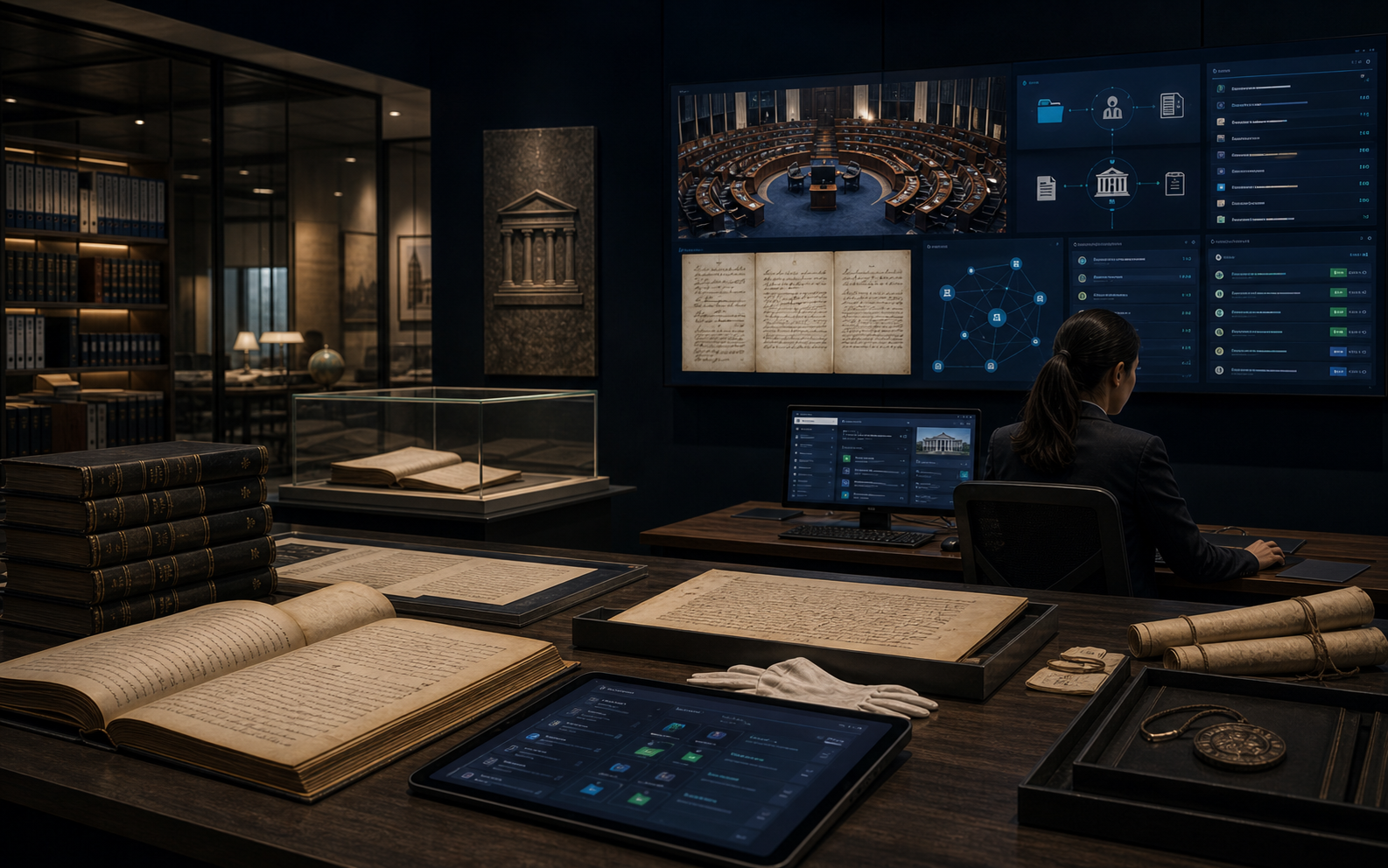
This case study shows how SBL turns operational complexity into a governed digital operating model where workflow, data, quality and decisions can be managed together.
The institutional challenge
- Fragile History: Documents from 1888 onwards required specialized handling to prevent further deterioration during the data modernization process.
- Access Bottlenecks: Manual searching through paper archives was time-consuming, hindering legislative research and public transparency.
- Complex Metadata: Handwritten records required expert indexing and metadata preparation to ensure they could be accurately retrieved via digital search.
What SBL engineered
- Mapped the institutional workflow before engineering the digital operating model around governance and continuity.
- Connected records, users, rules and review steps into a controlled civic technology workflow.
- Delivered the program as infrastructure for better decisions, transparency and public-service performance.
- Consult & Align: Establishing strict security and handling protocols for high-value government documents.
- Document Preparation: Carefully readying fragile paper archives (both printed and handwritten) for high-resolution capture.
How the work should be understood
SBL's role is not limited to executing a task. The value comes from understanding the operating workflow, engineering the data and automation layer, applying governance controls, and helping the institution move from manual dependency to intelligent, measurable operations.