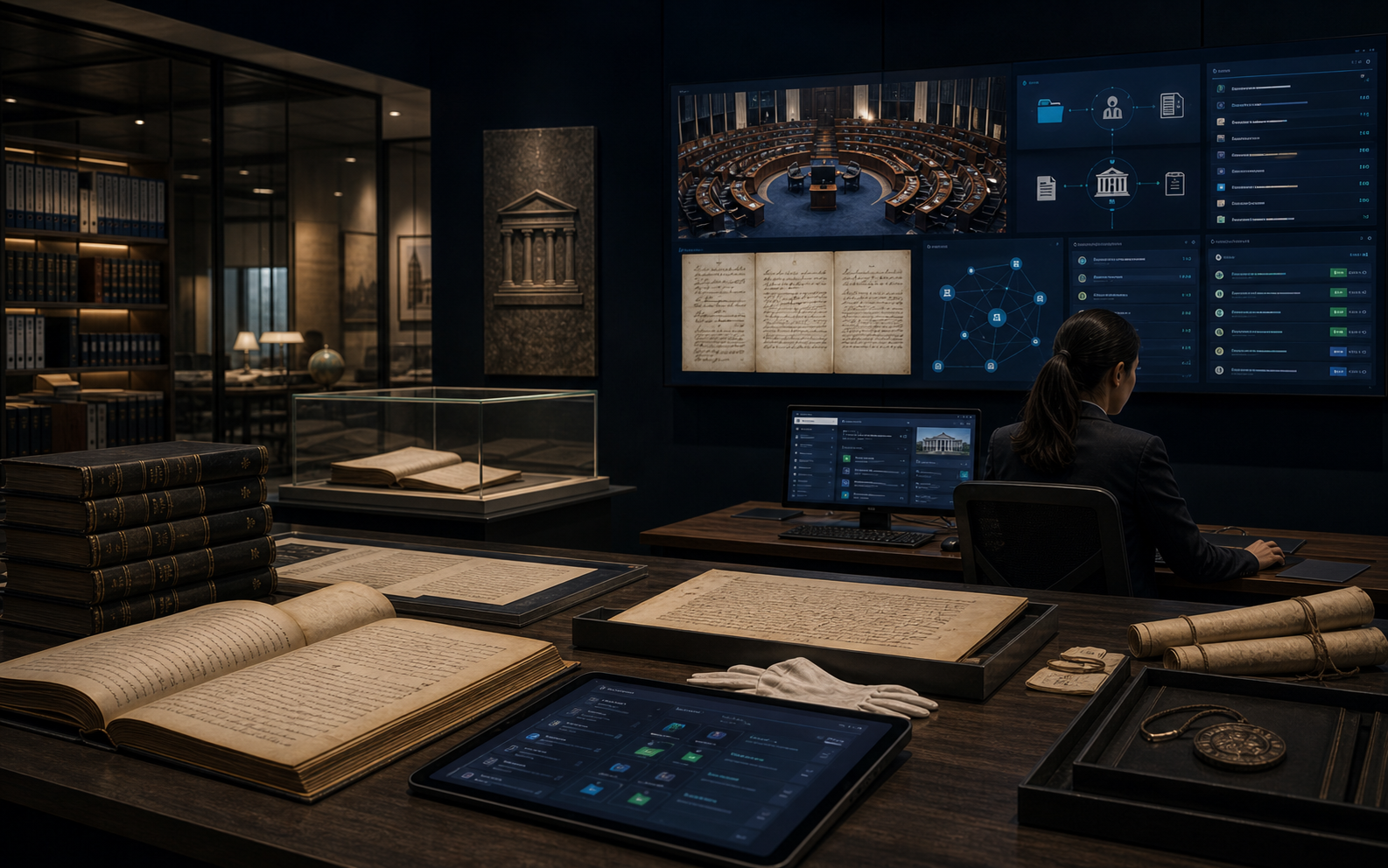
This case study shows how SBL turns operational complexity into a governed digital operating model where workflow, data, quality and decisions can be managed together.
The institutional challenge
- Adoption Barriers: Many Assembly Members were not tech-savvy, necessitating a "paper-like" user interface that minimized the learning curve.
- Workflow Complexity: The project required a deep architectural understanding of the law-making process, question-and-answer protocols, and internal Sabha operations.
- Time-Critical Operations: All data processing and document availability had to be managed in real-time, often within hours before a session commenced.
What SBL engineered
- Mapped the institutional workflow before engineering the digital operating model around governance and continuity.
- Connected records, users, rules and review steps into a controlled civic technology workflow.
- Delivered the program as infrastructure for better decisions, transparency and public-service performance.
- Consult & Align: Conducting a detailed study of internal legislative operations and the complex "Question Process.".
- Workflow Setup: Mobilizing a specialized .Net development team to create the eVidhan application architecture.
How the work should be understood
SBL's role is not limited to executing a task. The value comes from understanding the operating workflow, engineering the data and automation layer, applying governance controls, and helping the institution move from manual dependency to intelligent, measurable operations.