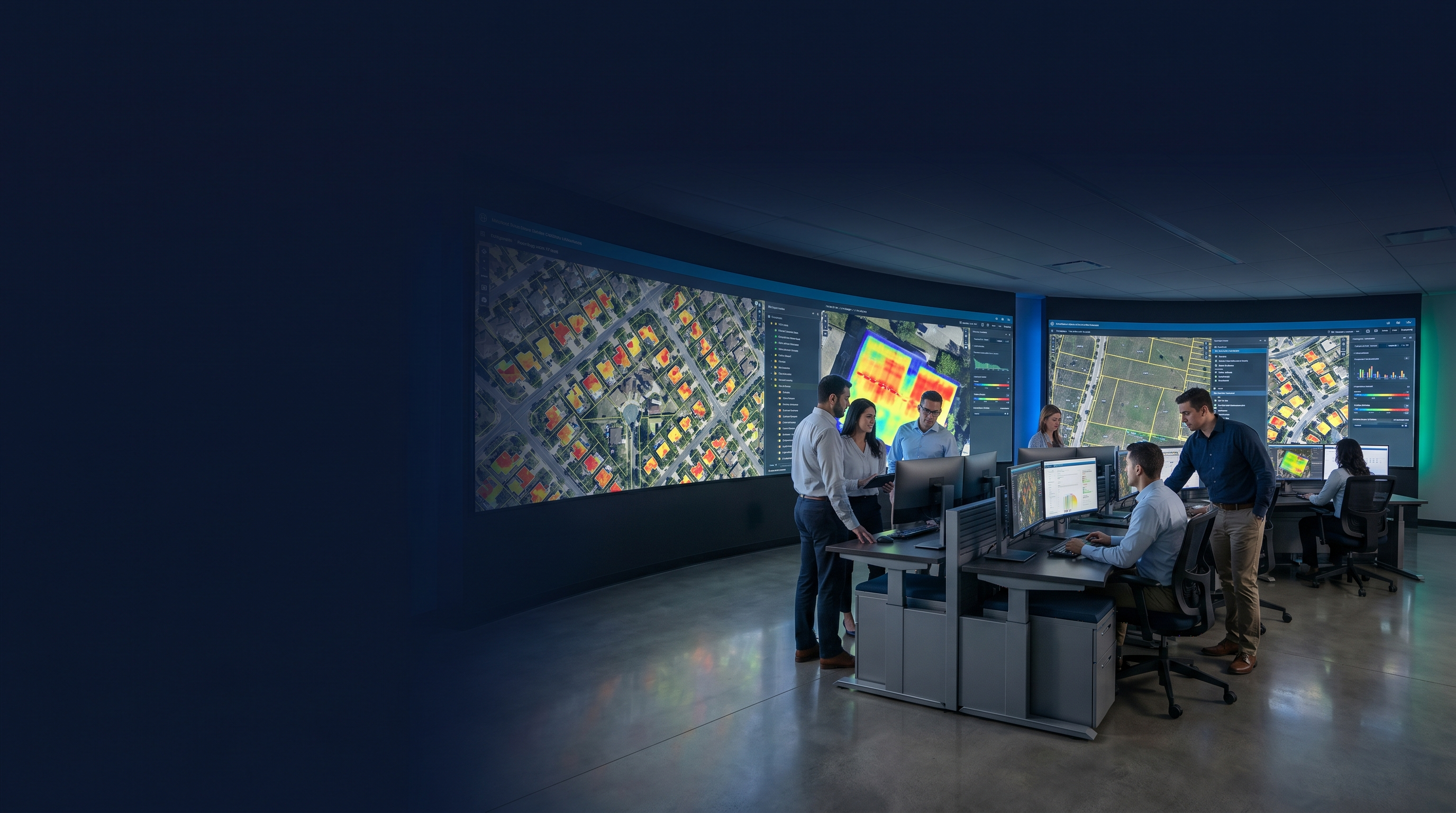
This case study shows how SBL turns operational complexity into a governed digital operating model where workflow, data, quality and decisions can be managed together.
The institutional challenge
- Orientation Sensitivity: Only south-facing roofs provide the efficiency needed for a viable return on investment.
- Shading Obstacles: Urban density creates complex shading patterns from trees and adjacent buildings that can render solar panels ineffective.
- Scale vs. Speed: Analyzing thousands of individual residential rooftops across the London suburbs required a process that bypassed traditional ground-based site visits.
What SBL engineered
- Converted physical, geospatial and asset evidence into structured spatial intelligence.
- Applied GIS, BIM, LiDAR or mapping workflows with accuracy controls and governance-ready outputs.
- Delivered decision-ready models that support infrastructure planning, conservation, inspection or asset management.
- Consult & Align: Establishing the "Ideal Roof" criteria (slope, orientation, and zero-shade tolerance).
- Workflow Setup: Mobilizing a remote sensing team specialized in residential rooftop geometry.
How the work should be understood
SBL's role is not limited to executing a task. The value comes from understanding the operating workflow, engineering the data and automation layer, applying governance controls, and helping the institution move from manual dependency to intelligent, measurable operations.