

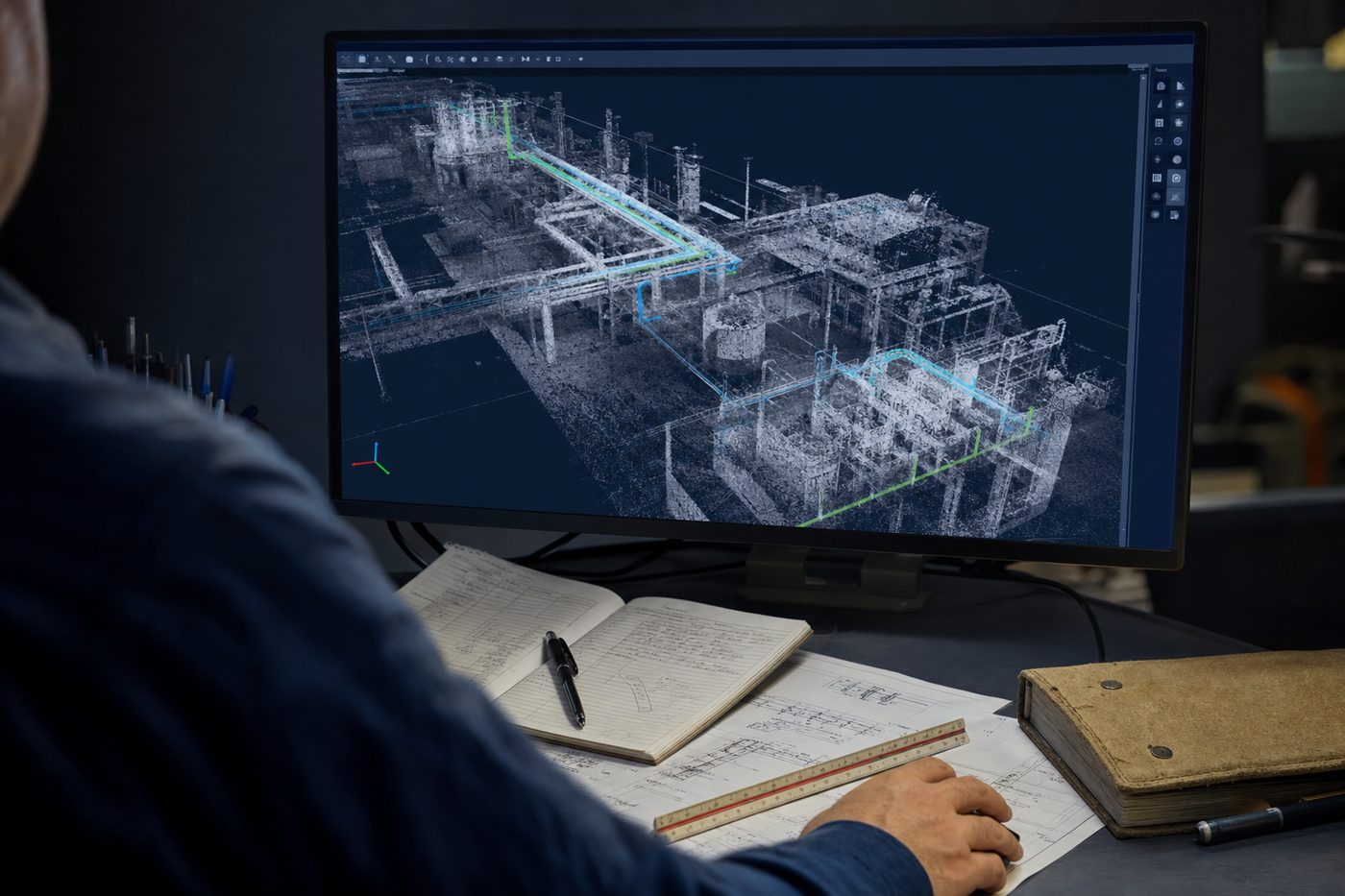
Scan-to-BIM usually answers a geometry question: what exists, where is it, and how accurately can we represent it? Operational BIM asks a different question: who needs to make decisions with this model after delivery?
Geometry is only the first deliverable
Autodesk explains BIM's value for facilities management as the ability to provide a digital representation of an asset across its lifecycle. Esri's digital twin material makes a related point: spatial context, time awareness and integrated datasets matter when the model supports operations.
This is where many scan-to-BIM projects stop early. They produce a faithful model, but the owner still cannot answer operational questions: which assets are critical, what system does this serve, what maintenance history exists, and what happens if this element fails?
Operational BIM starts from those questions. The geometry is still essential. It is not the whole system.
Owners need model intent, not just model detail
A highly detailed model can become too heavy for day-to-day users. A facilities team may need asset IDs, floor context, inspection status and work-order links more than every design element.
Esri's writing on indoor GIS and operational digital twins captures this shift well: the twin becomes useful when it reflects how space is used, how assets are maintained and how conditions change over time.
The practical choice is not low detail versus high detail. It is the right detail for the decision. Structural conservation, MEP coordination, facility maintenance and public access all require different model content.
The handoff should be designed before modelling starts
If a BIM model will support facilities, the project should define asset classes, naming conventions, maintenance fields, GIS alignment and update ownership before production begins.
Otherwise the model becomes a beautiful archive of a building at one point in time. The owner then has to fund another project to make it operational.
SBL's BIM and spatial intelligence work treats point clouds, modelling, quality checks and handover data as one delivery chain. The model should be shaped by the operating use case.
The test for operational readiness
Ask five practical questions. Can a non-modeller find an asset? Can the owner connect it to maintenance data? Can the model support a compliance check? Can it be updated after work is done? Can it connect to a wider GIS or asset-management environment?
If the answer is no, the model may still be a good scan-to-BIM deliverable. It is not yet operational BIM.
That distinction matters because the cost appears later. Owners do not pay only for modelling. They pay for whether the model can keep serving them after the project team leaves.
Questions teams ask before they start
What is scan-to-BIM?
It is the conversion of laser-scan or point-cloud data into a BIM model representing existing physical conditions.
What makes BIM operational?
Operational BIM connects model geometry to asset data, maintenance context, ownership, GIS layers and workflows.
When should handover requirements be defined?
Before modelling begins, so level of detail, asset fields and naming conventions match the owner's operating use case.