

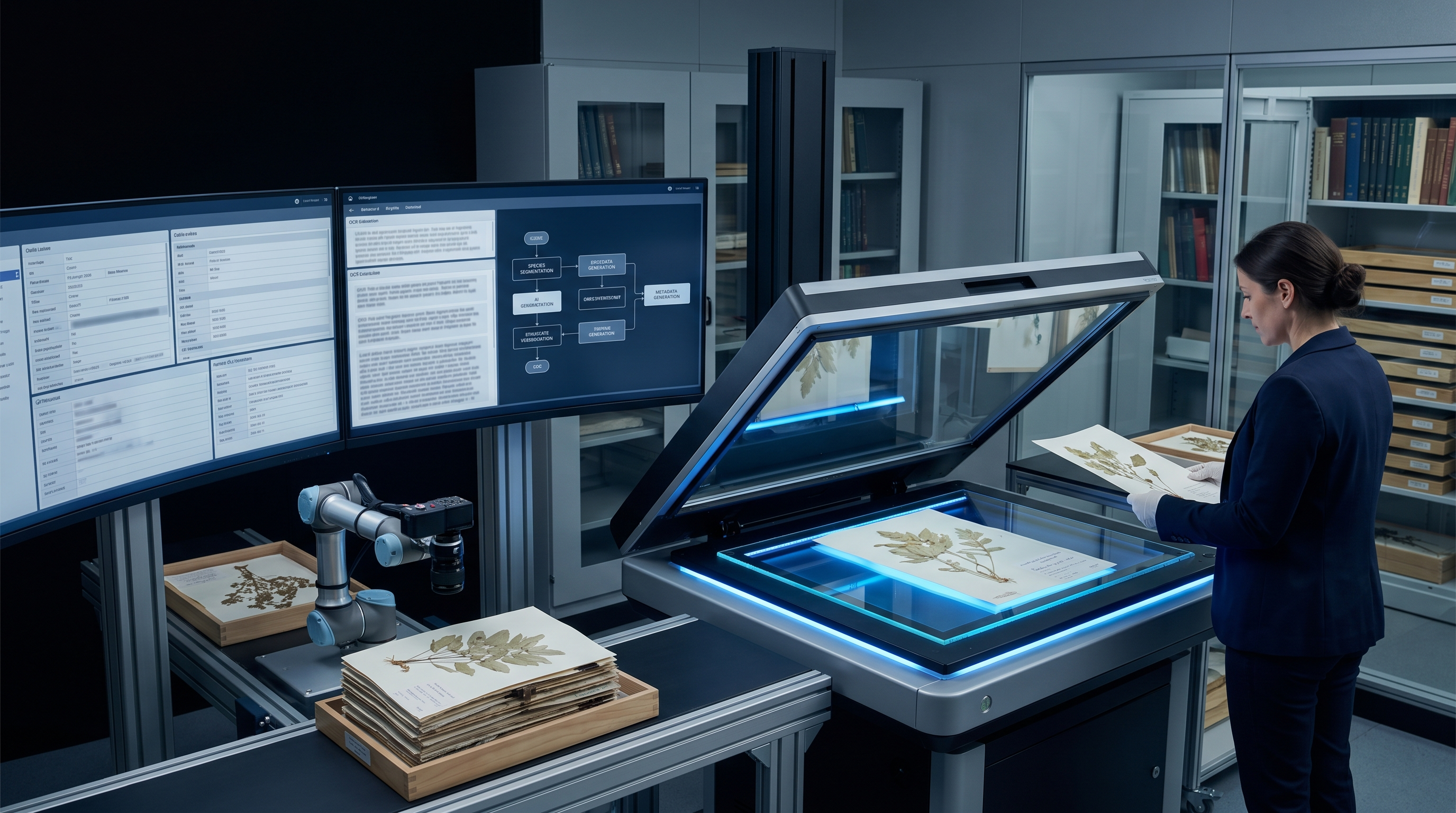
A herbarium sheet can hold a pressed plant, a handwritten label, a collector note, a location reference, a date, a determination history and decades of scholarly context. Scanning captures the sheet. It does not automatically capture the science.
Digitisation is only the first conversion
Preservica draws a useful distinction between digitisation and digital preservation. Digitisation converts an analogue object into a digital file. Preservation keeps digital content usable, authentic and readable over time. Herbarium programmes need both, but they also need a third layer: scientific data conversion.
A TIFF image of a specimen is valuable. A machine-readable record that connects the image to collector, date, geography, species, determiner, barcode and preservation metadata is more useful for research. That record has to retain provenance, because botanical data loses value when the link back to the specimen becomes weak.
SBL's Kew-scale proof point, with 6.5M+ botanical specimens processed, sits in this difficult middle. The work is not generic scanning. It is non-destructive capture, metadata interpretation, transcription and validation at collection scale.
The sheet contains several data problems at once
A herbarium specimen is visual data, text data, taxonomic data and provenance data in one object. The plant itself may require image segmentation. The label may require OCR or manual transcription. The scientific name may have changed. The location may use historical geography. The collection event may sit across multiple notes.
This is why specimen data cannot be treated like ordinary document capture. The record model must preserve uncertainty. A questionable locality, damaged label or superseded name should not be forced into false certainty simply because a database field needs a value.
Good conversion pipelines use controlled vocabularies where possible, confidence flags where needed and review queues where judgement matters. The goal is not to make every record look neat. The goal is to make every record usable and honest.
Machine-readable does not mean machine-decided
AI can help identify label regions, read printed text, suggest handwriting transcriptions and enrich metadata. It should not silently rewrite scientific context. Curators and data reviewers still need authority over ambiguous specimens, taxonomic interpretation and provenance-sensitive changes.
This is where many AI archive narratives become too broad. They promise discovery but skip the governance. A research institution needs to know which fields were machine-suggested, which were human-validated and which remain uncertain.
Machine readability is therefore a controlled state. It means the data can be parsed, searched, linked and used by downstream systems, with its source and confidence preserved.
What a serious herbarium data programme should produce
The deliverables should include preservation-grade images, access derivatives, structured specimen records, field-level confidence, unresolved exception queues, taxonomy handling rules and audit logs. If the programme is AI-facing, it should also define what data is safe for model training and what must remain under curator review.
For biodiversity research, the value is cumulative. Each clean specimen record improves search, distribution modelling, climate research, conservation work and institutional access. But a weak conversion can also introduce attribution errors at scale.
The standard is simple to state and hard to meet: every machine-readable record should still know which physical specimen it came from.
Questions teams ask before they start
What is herbarium digitisation?
It is the imaging and data conversion of preserved plant specimen sheets into digital images and structured records.
Why is metadata important for herbarium collections?
Metadata connects the specimen to collector, date, location, taxonomy, preservation context and future scientific use.
Can AI read herbarium labels automatically?
AI can assist with extraction, but historical handwriting, taxonomy and damaged labels still need human review and provenance controls.